


Beat Dash: Neon Rhythm
CodiPlayer
Beat Dash: Neon Rhythm is a free music game from CodiPlayer that puts timing at the center of every run. I played it with the expectation of a quick rhythm title, and that is exactly where it makes the most sense: short sessions, immediate controls, and a visual world built around moving with the beat. Its basic idea is easy to understand, but the quality of the experience depends heavily on how much you enjoy repeating musical patterns and improving small timing mistakes.
The game is listed in the Music category and has an Everyone content rating, so it is aimed at a broad audience rather than a niche group of older players. It requires Android 6.0 or later, which makes it accessible on many older Android devices. The current version is 1.0.1, and the developer is CodiPlayer. Those details matter because this feels like a compact, approachable game you can hand to someone without first explaining a complicated progression system.
How the free rhythm experience works in everyday play
The central appeal is the connection between movement and sound. Instead of treating music as background decoration, Beat Dash: Neon Rhythm asks me to use the rhythm as a practical guide. I watch the path, listen for the pulse, and try to act at the right moment. When the visual cues and audio line up, a successful section feels satisfying even when the underlying action is simple.
That simplicity is a strength during the first few sessions. I do not need to learn a large collection of characters, menus, or rules before starting. The game’s short description, “Beat Dash,” gives a fair impression of the experience: it is about dashing through music-focused stages while trying to keep pace. The concept is immediately readable, which makes it suitable for a quick break rather than a long setup.
My favorite way to approach it is with headphones and a quiet few minutes. The sound becomes more useful when outside noise is reduced, because rhythm games are easier to judge when I can hear the beat clearly. On a bus or in a busy waiting room, the visual side still helps, but the experience is less dependable when I cannot focus on the timing.
Related News






A useful habit is to treat an early attempt as a reading pass instead of demanding a perfect result. I watch how the game presents its musical patterns, notice where my reactions become late, and then use another run to correct one specific mistake. That approach is more effective than tapping or steering randomly and hoping the score improves. Beat Dash: Neon Rhythm rewards attention more than frantic input.
This also reveals one of its important trade-offs. A player who enjoys learning a pattern through repetition may find the game engaging, while someone looking for constant novelty may see the same process as a chore. The fun comes from gradually becoming more accurate, not from a deep story or a large simulation. If your idea of a music game is a relaxed playlist with very little pressure, this may feel more demanding than expected.
What the free price means for a potential player
The confirmed price is free, so the initial decision is straightforward: there is no purchase cost to test the game. That makes it easy to recommend as a low-risk download for someone curious about rhythm-based play. I can try it during a spare moment without having to decide whether the full experience justifies an upfront payment.
Gallery
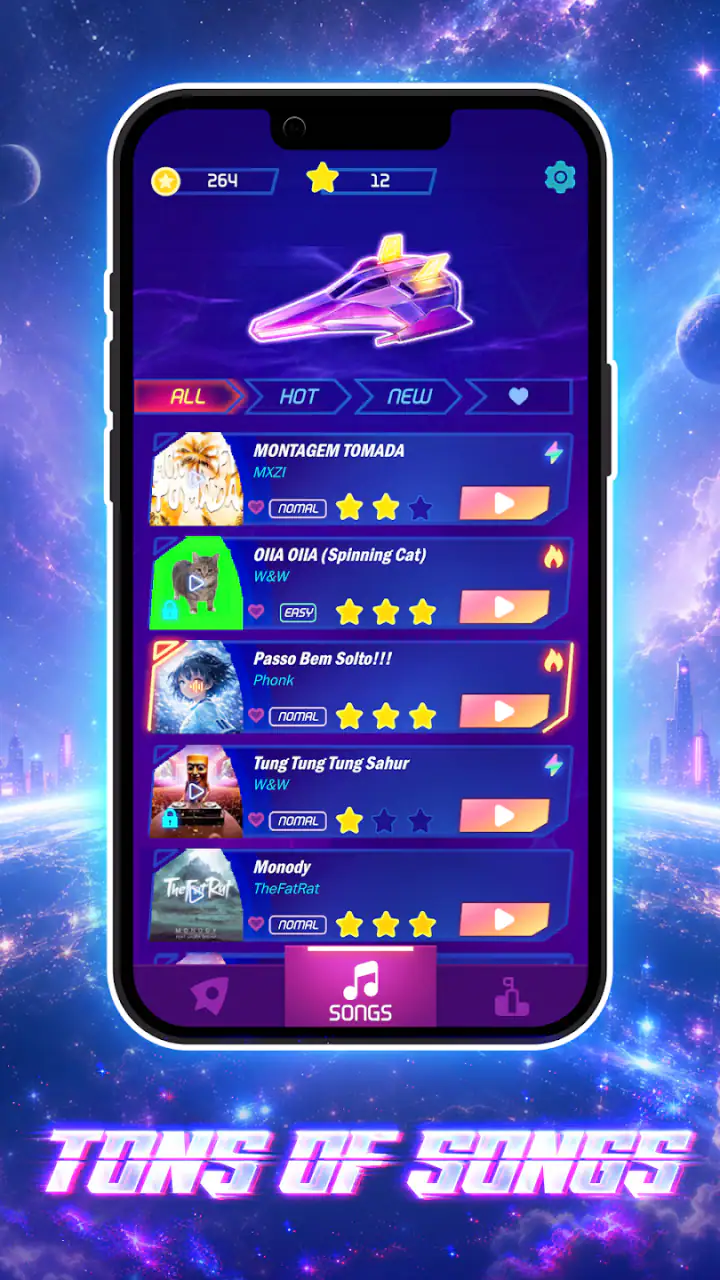
At the same time, “free” should be understood precisely. It tells me that access does not require a listed purchase price; it does not automatically promise a particular amount of content, a specific monetization model, or a completely uninterrupted experience. I would judge the value by how long the timing challenges remain enjoyable, not by assuming that free means unlimited depth.
That distinction is especially important when comparing it with paid music games. A paid alternative may justify its cost through a larger song selection, more elaborate presentation, or a stronger long-term structure. Beat Dash: Neon Rhythm has a different advantage: I can evaluate its core rhythm feel first. For many casual players, that is more useful than paying in advance for a style they may not enjoy.
The game has passed the half-million-install mark, which suggests that the concept has reached a substantial audience. I do not treat that figure as proof that it will suit everyone, but it does make the title feel less like an obscure experiment and more like a game with a recognizable place among mobile rhythm releases. The Everyone rating also supports its role as an accessible choice for families and younger players, provided they already enjoy timing-based play.
Where the experience delivers real value
The strongest value is convenience. Beat Dash: Neon Rhythm is the kind of game I can open when I have only a short window and still understand what I am meant to do. It does not ask me to remember a complicated plot or maintain a large collection before the next meaningful action. The music-world presentation gives the runs a clear identity, while the rhythm focus keeps the objective easy to grasp.
It can also work as a small concentration exercise. I would not describe it as a productivity tool, but successful play requires me to divide attention between the track, the timing, and the next movement. When I stop reacting impulsively and start anticipating the beat, my performance improves. That makes each retry feel purposeful rather than completely random.
One less obvious use is as a gentle introduction to rhythm games for someone who finds traditional note-heavy interfaces intimidating. Some music games fill the screen with lanes, symbols, and simultaneous commands. Beat Dash: Neon Rhythm presents its appeal through movement and timing, which may feel more natural to a player who prefers visual flow over dense notation. It is not automatically easier, but its premise is less intimidating at first glance.
Another practical strength is that the game can suit two different moods. I can play casually, accepting imperfect runs and enjoying the neon atmosphere, or I can focus on improving timing through repeated attempts. That flexibility gives the free download more value than a game that only works when I am ready for serious concentration.
For a parent or older sibling choosing something for a younger player, the Everyone rating removes one obvious barrier. I would still pay attention to how the child responds to repeated failure, because rhythm games can become frustrating when progress depends on precision. The broad age classification makes it suitable to consider, but it does not guarantee that every player will enjoy the pressure of missed beats.
Trade-offs that affect the decision
The first limitation is that the premise may become narrow if I want more than timing and movement. Beat Dash: Neon Rhythm is not the right choice for someone seeking a role-playing campaign, a social hangout, or a strategy layer. Its identity is concentrated around musical runs. That focus helps it start quickly, but it also means the game has less to offer when I am no longer in the mood for rhythm practice.
Precision can create another point of friction. Touch controls are convenient, but they are not as tactile as physical buttons. A small finger movement, an obstructed view, or an accidental touch can affect a run. I get better results by holding the phone securely, keeping my playing hand relaxed, and avoiding a crowded screen position. Players who are sensitive to input inconsistency may prefer a controller-friendly game, if available in their usual alternatives.
Sound is also more important here than in many casual games. Without clear audio, I have to rely more on visual prediction, and that can weaken the feeling of being connected to the music. Headphones improve concentration, but they are not always practical. If I mostly play with the sound muted, I would choose a game whose visual timing is the main attraction instead.
There is a difference between a game being easy to start and being easy to master. The former applies well here; the latter should not be assumed. A beginner may understand the objective immediately and still need several attempts to handle faster or less familiar patterns. That learning curve is valuable for players who enjoy practice, but it can feel repetitive to anyone who wants to win on the first try.
I also would not choose it solely because it is free. Free access lowers the risk, but value still depends on personal taste. Someone who rarely listens to music while gaming may find the central idea less compelling. Someone who prefers long sessions may also outgrow the quick-run format unless the timing challenge itself remains satisfying.
Who is most likely to enjoy it
I see Beat Dash: Neon Rhythm as a good match for casual players who want a music game they can understand quickly. It is particularly appealing if you like visual motion, short attempts, and the feeling of improving through better timing. The free price makes it an easy experiment for people who have never tried this type of game before.
It is also worth considering for players who enjoy replaying a familiar challenge to make a cleaner run. The key question is not whether you like music in general, but whether you enjoy turning a beat into a gameplay instruction. If that connection sounds satisfying, the game has a clear reason to stay installed.
For a realistic everyday scenario, imagine having ten minutes before an appointment. I would open the game, play a run without needing to reconstruct a story, then attempt it again while focusing on the section where my timing slipped. That is a better fit than a large adventure game that needs a longer uninterrupted session. The same convenience works during a short commute, although headphones and a stable grip make the experience more comfortable.
I would skip it if I want a deep music library, a narrative campaign, or extensive customization as the main reason to play. I would also be cautious if missed inputs quickly make me angry. In that case, a slower, more forgiving music title or a game with turn-based interaction may provide better value, even if it is less visually energetic.
Compared with traditional rhythm games, this one’s movement-centered presentation may feel more active and less like following notes in fixed lanes. Compared with endless runners, its musical timing gives each action more structure than simply avoiding obstacles. That middle ground is its most distinctive appeal: it borrows the immediacy of a runner while asking for the attention associated with a rhythm game.
Practical ways to get more from each session
I recommend starting with audio at a comfortable level rather than turning it up aggressively. Loud sound does not automatically improve timing, and it can make a short session tiring. The useful goal is a clear pulse that I can follow without straining. If the environment is noisy, I would postpone a serious improvement attempt and use the session only to learn the visual flow.
It also helps to separate reaction errors from prediction errors. If I respond after a cue appears, I may be late because the game expects anticipation. If I act early, I may be reading the beat correctly but moving before the visual signal is ready. Identifying which kind of mistake I am making turns retries into practice instead of repetition without a plan.
Another tip is to keep sessions deliberately short when frustration starts replacing concentration. Rhythm games often become harder when I continue playing with tense hands and rushed decisions. Taking a break gives me a better chance of returning with cleaner timing. This is a small but important advantage of the game’s quick-session nature: I do not need to commit to a long play period to feel that I have made progress.
On an older compatible Android phone, I would close unnecessary background apps before a focused attempt and keep the screen free from distractions. The minimum operating system is Android 6.0, but compatibility alone does not tell me how every device will feel during play. A stable touch response matters more than having the newest handset, so testing a few runs is the sensible way to judge comfort on personal hardware.
The current release, version 1.0.1, is the one I would look for when installing. Keeping the app updated is generally sensible for a game whose timing depends on responsive input, although I would still judge the experience by actual play rather than expecting a version number to solve every device-specific issue.
My recommendation after weighing the value
The clearest reason to try Beat Dash: Neon Rhythm is its low-risk access combined with a focused rhythm challenge. I can sample the core idea without paying, and the game is simple enough to explain in one sentence while still giving me a reason to replay a stage. That is a solid value proposition for casual mobile gaming, especially when I want something more engaging than passive scrolling but less demanding than a full-length adventure.
My recommendation is strongest for newcomers to music games, fans of short timing challenges, and players who enjoy improving through repetition. The Everyone rating and broad Android compatibility also make it an approachable option to consider for a mixed-age household. I would introduce it as a quick, beat-focused game rather than promising a large all-purpose entertainment package.
I would choose a different option if my priority were a richer song catalog, a substantial story, or a more forgiving control style. Those needs are not weaknesses in the same sense as a technical fault; they are simply outside the game’s main purpose. Beat Dash: Neon Rhythm delivers value by staying focused, and that focus will either feel refreshing or limited depending on what I expect from a mobile game.
Overall, I think CodiPlayer has created a sensible free entry point into rhythm gaming. The visual movement, musical timing, and quick-session format work best when I play with sound on and treat each attempt as practice. It is not a universal recommendation, but for the right player, Beat Dash: Neon Rhythm is an easy game to try and a surprisingly satisfying one to revisit when the goal is simply to move more accurately with the beat.
FAQs for Beat Dash: Neon Rhythm
What is Beat Dash: Neon Rhythm, and how is the gameplay structured?
Beat Dash: Neon Rhythm is a music-based arcade game that combines fast reflexes, rhythmic timing, and neon-styled visuals. During each level, you guide your character through an obstacle-filled track while tapping, swiping, or changing direction in time with the music. The pace becomes progressively faster, so success depends on learning patterns, reacting quickly, and replaying stages to improve your score.
Can Beat Dash: Neon Rhythm be played offline?
Many core levels in Beat Dash: Neon Rhythm can generally be played without a constant internet connection, which makes it suitable for short sessions while traveling or when mobile data is unavailable. However, an internet connection may still be required for downloading new content, synchronizing progress, viewing advertisements, accessing leaderboards, or completing certain in-app features. Availability can also vary by device and game version.
Is Beat Dash: Neon Rhythm free to download, and does it contain in-app purchases?
Beat Dash: Neon Rhythm is typically available as a free download, but the free version may include advertising and optional in-app purchases. These purchases can be used for items such as removing ads, unlocking content, obtaining extra attempts, or speeding up progression, depending on the current release. You can usually play without paying, although patience and repeated attempts may be needed.
Is Beat Dash: Neon Rhythm suitable for children and casual players?
The game is easy to understand because its main concept is based on following music and avoiding obstacles, but the later stages can become quite challenging and require quick reactions. Parents should check the store rating, advertising content, and purchase settings before allowing younger children to play. Casual players can enjoy short sessions, while experienced rhythm-game fans may appreciate the higher difficulty.
What devices are compatible with Beat Dash: Neon Rhythm, and does it require powerful hardware?
Beat Dash: Neon Rhythm is designed for modern Android and iOS devices, but exact compatibility depends on the operating-system version and the developer’s current requirements. It normally does not need flagship hardware, although older phones may experience slower performance, longer loading times, or reduced visual quality. Before downloading, check the official store listing for supported devices and available storage requirements.
Pros
- Fast
- responsive controls make every beat feel satisfying.
- Bright neon visuals create an energetic arcade atmosphere.
- Short levels are ideal for quick gaming sessions.
- Increasing difficulty keeps the gameplay challenging and engaging.
- Simple mechanics make it easy for new players to start.
Cons
- Frequent retries may feel frustrating when timing becomes demanding.
- Visual effects can make obstacles harder to distinguish.
- The soundtrack may become repetitive during longer sessions.
- Progression can feel limited once the main levels are completed.
- Some players may find the gameplay lacks variety over time.


